

Naju Takes Flight as a Hub for Sports and Tourism
- Date
- 2026.04.03 09:21
- Views
- 258
- Department
- 체육진흥과·시민공감홍보실
Home to extensive sports infrastructure—becoming a premier destination for major tournaments and training camps
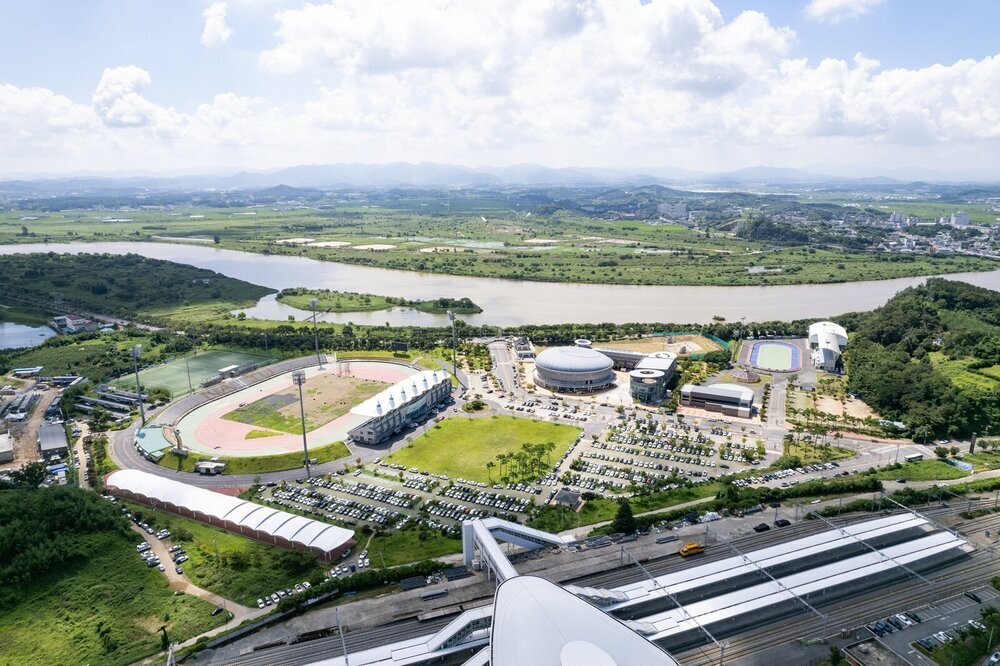
The nation’s only sports complex directly connected to a KTX and SRT station
Adding momentum to becoming a sports tourism city as part of the 2026 Visit Naju Year initiative
As local governments across Korea seek new growth engines by attracting major sporting events and expanding athletic infrastructure, the Naju City Government in Jeollanam-do is rapidly emerging as a leading hub for the sports industry. By hosting national-level competitions every year, promoting recreational sports, fostering elite athletes, and attracting training camps, Naju continues to position itself as a sports industry city. At the heart of this growth is the Naju Complex Sports Park, the only sports complex in Korea connected directly to a KTX and SRT station. The facility’s accessibility has become one of Naju’s most distinctive advantages. Adding further value to the city’s brand is badminton superstar and Naju native An Se-young, whose global success has further elevated Naju’s reputation as a sports city. As Naju continues its rise as a sports tourism destination, the city is charting an ambitious vision for the future.
Naju Complex Sports Park and Naju Station, offering unmatched accessibility
One of Naju’s greatest advantages as a sports industry city is its exceptional mix of sports facilities and transportation infrastructure. Completed in 2011, Naju Complex Sports Park is a multipurpose sports complex equipped with a track-and-field stadium, an indoor gymnasium, and athlete accommodations. The complex also features a multipurpose sports center with handball and volleyball courts, a swimming pool, ssireum arena, roller skating track, jokgu courts, traditional archery range, and squash courts. These facilities play a vital role in hosting tournaments and attracting training camps from across the country. A notable addition is the Bandabi Sports Center, completed in April 2025 following renovations to an aging gymnasium. The facility was designed as an inclusive sports venue where players with and without disabilities can enjoy sports together. The Bitgaram Multipurpose Culture and Sports Center, which opened on March 12, further expanded the city’s sports infrastructure by constructing a swimming pool, a multipurpose gymnasium, a running track, and other athletic facilities.
What truly sets Naju apart is that Naju Station provides seamless access to competition venues, as it is the only station in Korea served by both KTX and SRT that is directly connected to a comprehensive sports complex. This unique advantage makes it easy for athletes, teams, and spectators from the Seoul metropolitan area and major cities nationwide to reach event sites, creating ideal conditions for hosting sporting events. The combination of world-class sports facilities and outstanding transportation connectivity has become one of Naju’s defining competitive strengths.
Major tournaments enhance Naju’s reputation as a sports city
Naju continues to reinforce its standing as a sports industry city by hosting a steady stream of sporting events each year. National marathon races, cycling competitions, gran fondos, track-and-field games, shooting championships, and numerous other events bring athletes, families, sports enthusiasts, and visitors to the city throughout the year. These sporting events serve as more than athletic competitions. They are recognized as key drivers of the local economy, generating demand for accommodations, dining, tourism, and related services. In 2025 alone, Naju hosted around 30 national- and provincial-level competitions across more than 20 sports disciplines, attracting approximately 37,000 athletes and team personnel.
As part of the 2026 Visit Naju Year initiative, the city is also implementing stay-and-play sports tourism strategies that connect sporting events and training camps with local tourism programs, encouraging visitors to extend their stays and explore the region. These efforts are laying the foundation for Naju’s continued growth as one of Korea’s leading sports tourism destinations.
A premier destination for training camps
With its outstanding sports infrastructure, Naju has also stood in the spotlight as a training camp destination for sports teams across the country. Thanks to its mild climate, high-quality athletic facilities, and convenient transportation network, teams from a wide range of sports regularly choose Naju as their training base. In 2025 alone, 27 teams across four sports—including track and field, shooting, and cycling—held training camps in Naju, generating more than 4,600 athlete visits. Major sporting events and training camps also deliver substantial economic benefits to the local community. As athletes, coaches, and support staff stay in the city for extended periods, spending on accommodations, dining, and tourism contributes directly to the local economy. Building on these advantages, Naju continues to strengthen its training-camp attraction strategy while expanding its training facilities and long-stay accommodations to better serve visiting teams.
Elevating Naju’s profile with badminton superstar An Se-young
Another key factor behind Naju’s growing reputation as a sports city is its connection to one of the world’s most accomplished athletes. Naju native An Se-young has established herself as one of the world’s top badminton players, winning a series of international titles and cementing her status as a global icon of the sport. As an ambassador for Naju City, An has also played a significant role in raising the city’s profile both at home and abroad.
Her achievements on the international stage have made her a symbol of Naju sports and a source of pride for locals, inspiring young people throughout the region to pursue their own ambitions. Naju is actively leveraging An’s global recognition to further boost its brand value as a leading sports city.
2026 Visit Naju Year to drive sports tourism growth
As part of the 2026 Visit Naju Year initiative, the city is placing renewed emphasis on sports tourism. Naju plans to actively attract national sporting events and training camps while expanding its “One Night, Double Rewards” stay-and-play tourism model, encouraging participants to extend their visits and enjoy the city’s tourism offerings alongside athletic activities. The strategy is designed to generate both tourism and consumer spending by encouraging visitors to stay overnight, thereby maximizing the economic impact of sporting events. To position sports visitors as a pivotal consumer base for the local economy, the city also plans to connect sports tourism with the Yeongsangang River, local attractions showcasing Naju’s rich historical and cultural heritage as an ancient capital, and regional specialties such as the Naju pear.
Looking ahead, Naju has set forth a vision of becoming a leading center of Korea’s sports industry by attracting more sporting events and training camps while fostering sports-related industries. Through continued investment in sports infrastructure, expanded sporting events, and the promotion of sports tourism, the city expects broad economic benefits across sectors, including hospitality, dining, and tourism.
Acting Mayor Kang Sang-gu stated, “Naju enjoys a mild climate and is the only city in Korea where a comprehensive sports complex is directly connected to Naju Station, served by both KTX and SRT. Building on these unique characteristics, we are actively attracting national sporting events and training camps as we prepare to take the next step toward becoming a sports tourism city where sports and tourism grow together.”
The nation’s only sports complex directly connected to a KTX and SRT station
Adding momentum to becoming a sports tourism city as part of the 2026 Visit Naju Year initiative
As local governments across Korea seek new growth engines by attracting major sporting events and expanding athletic infrastructure, the Naju City Government in Jeollanam-do is rapidly emerging as a leading hub for the sports industry. By hosting national-level competitions every year, promoting recreational sports, fostering elite athletes, and attracting training camps, Naju continues to position itself as a sports industry city. At the heart of this growth is the Naju Complex Sports Park, the only sports complex in Korea connected directly to a KTX and SRT station. The facility’s accessibility has become one of Naju’s most distinctive advantages. Adding further value to the city’s brand is badminton superstar and Naju native An Se-young, whose global success has further elevated Naju’s reputation as a sports city. As Naju continues its rise as a sports tourism destination, the city is charting an ambitious vision for the future.
Naju Complex Sports Park and Naju Station, offering unmatched accessibility
One of Naju’s greatest advantages as a sports industry city is its exceptional mix of sports facilities and transportation infrastructure. Completed in 2011, Naju Complex Sports Park is a multipurpose sports complex equipped with a track-and-field stadium, an indoor gymnasium, and athlete accommodations. The complex also features a multipurpose sports center with handball and volleyball courts, a swimming pool, ssireum arena, roller skating track, jokgu courts, traditional archery range, and squash courts. These facilities play a vital role in hosting tournaments and attracting training camps from across the country. A notable addition is the Bandabi Sports Center, completed in April 2025 following renovations to an aging gymnasium. The facility was designed as an inclusive sports venue where players with and without disabilities can enjoy sports together. The Bitgaram Multipurpose Culture and Sports Center, which opened on March 12, further expanded the city’s sports infrastructure by constructing a swimming pool, a multipurpose gymnasium, a running track, and other athletic facilities.
What truly sets Naju apart is that Naju Station provides seamless access to competition venues, as it is the only station in Korea served by both KTX and SRT that is directly connected to a comprehensive sports complex. This unique advantage makes it easy for athletes, teams, and spectators from the Seoul metropolitan area and major cities nationwide to reach event sites, creating ideal conditions for hosting sporting events. The combination of world-class sports facilities and outstanding transportation connectivity has become one of Naju’s defining competitive strengths.
Major tournaments enhance Naju’s reputation as a sports city
Naju continues to reinforce its standing as a sports industry city by hosting a steady stream of sporting events each year. National marathon races, cycling competitions, gran fondos, track-and-field games, shooting championships, and numerous other events bring athletes, families, sports enthusiasts, and visitors to the city throughout the year. These sporting events serve as more than athletic competitions. They are recognized as key drivers of the local economy, generating demand for accommodations, dining, tourism, and related services. In 2025 alone, Naju hosted around 30 national- and provincial-level competitions across more than 20 sports disciplines, attracting approximately 37,000 athletes and team personnel.
As part of the 2026 Visit Naju Year initiative, the city is also implementing stay-and-play sports tourism strategies that connect sporting events and training camps with local tourism programs, encouraging visitors to extend their stays and explore the region. These efforts are laying the foundation for Naju’s continued growth as one of Korea’s leading sports tourism destinations.
A premier destination for training camps
With its outstanding sports infrastructure, Naju has also stood in the spotlight as a training camp destination for sports teams across the country. Thanks to its mild climate, high-quality athletic facilities, and convenient transportation network, teams from a wide range of sports regularly choose Naju as their training base. In 2025 alone, 27 teams across four sports—including track and field, shooting, and cycling—held training camps in Naju, generating more than 4,600 athlete visits. Major sporting events and training camps also deliver substantial economic benefits to the local community. As athletes, coaches, and support staff stay in the city for extended periods, spending on accommodations, dining, and tourism contributes directly to the local economy. Building on these advantages, Naju continues to strengthen its training-camp attraction strategy while expanding its training facilities and long-stay accommodations to better serve visiting teams.
Elevating Naju’s profile with badminton superstar An Se-young
Another key factor behind Naju’s growing reputation as a sports city is its connection to one of the world’s most accomplished athletes. Naju native An Se-young has established herself as one of the world’s top badminton players, winning a series of international titles and cementing her status as a global icon of the sport. As an ambassador for Naju City, An has also played a significant role in raising the city’s profile both at home and abroad.
Her achievements on the international stage have made her a symbol of Naju sports and a source of pride for locals, inspiring young people throughout the region to pursue their own ambitions. Naju is actively leveraging An’s global recognition to further boost its brand value as a leading sports city.
2026 Visit Naju Year to drive sports tourism growth
As part of the 2026 Visit Naju Year initiative, the city is placing renewed emphasis on sports tourism. Naju plans to actively attract national sporting events and training camps while expanding its “One Night, Double Rewards” stay-and-play tourism model, encouraging participants to extend their visits and enjoy the city’s tourism offerings alongside athletic activities. The strategy is designed to generate both tourism and consumer spending by encouraging visitors to stay overnight, thereby maximizing the economic impact of sporting events. To position sports visitors as a pivotal consumer base for the local economy, the city also plans to connect sports tourism with the Yeongsangang River, local attractions showcasing Naju’s rich historical and cultural heritage as an ancient capital, and regional specialties such as the Naju pear.
Looking ahead, Naju has set forth a vision of becoming a leading center of Korea’s sports industry by attracting more sporting events and training camps while fostering sports-related industries. Through continued investment in sports infrastructure, expanded sporting events, and the promotion of sports tourism, the city expects broad economic benefits across sectors, including hospitality, dining, and tourism.
Acting Mayor Kang Sang-gu stated, “Naju enjoys a mild climate and is the only city in Korea where a comprehensive sports complex is directly connected to Naju Station, served by both KTX and SRT. Building on these unique characteristics, we are actively attracting national sporting events and training camps as we prepare to take the next step toward becoming a sports tourism city where sports and tourism grow together.”


첨부파일
전체(Zip)다운로드
- 이미지 1. 국내에서 유일하게 KTX·SRT 나주역과 연결돼 최고의 교통 인프라를 보유한 나주종합스포츠파크. 영산강변에 위치해 빼어난 풍광을 자랑한다.jpg (34 hit/ 760.7 KB) 다운로드 미리보기
- 이미지 2. 나주 홍보대사로도 활약하고 있는 배드민턴 여제 안세영 선수.JPG (34 hit/ 311.7 KB) 다운로드 미리보기
- 이미지 3. 지난 3월 개장한 빛가람복합문화체육센터 수영장에서 시민들이 수영을 즐기고 있다.jpg (36 hit/ 607.3 KB) 다운로드 미리보기
- 이미지 4. 영산강변을 자전거로 달리는 ‘2025 영산강 그란폰도’.JPG (34 hit/ 670.2 KB) 다운로드 미리보기
- 이미지 5. 2025 전국 나주마라톤대회.jpg (33 hit/ 815.9 KB) 다운로드 미리보기